The Clarion County, PA Drug Court is relatively new, starting in 2007 with funding from a state grant. It’s a small program reflective of the community that it serves and over the last several years it has done an incredible job of educating the citizens of Clarion County about addiction, treatment, and recovery. “We knew drug and alcohol was an underlying problem in many of the cases we deal with. We saw a need for treatment,” explained Judge James Arner as he opened a special National Drug Court Month graduation ceremony. “It was a major undertaking from our county, something very different from the usual process. It really took some education on the part of all of us who were involved.” Their efforts are paying off, and the graduation we took part in on our swing through Clarion was a testament to this community’s commitment to improving the lives of its citizens.
Our swing through Ohio brought us to Cleveland and Youngstown, two very different events in two very different communities. Along the tour we have seen many graduations and rallies. Cleveland offered us a chance to see Drug Court in action. It is important to remember that the celebrations we have been a part of would not be possible without the work that goes on in the courtroom.
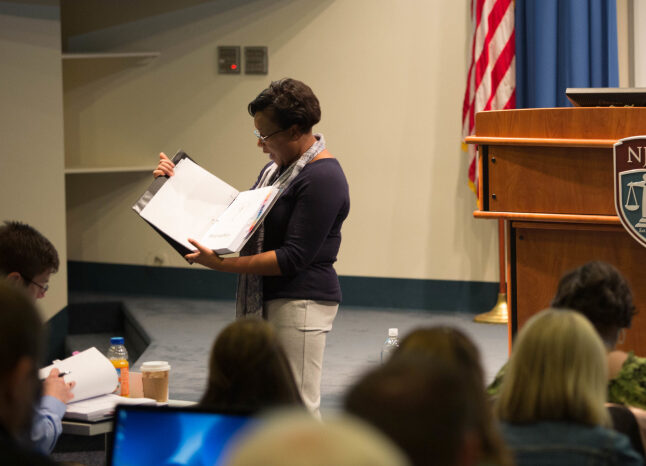
We started the day in Judge Anita Laster Mays’ courtroom where she has presided over Drug Court since 2009. Judge Mays knows the value of hard work. At the age of six she decided she would be a judge. At nine she was selling pop bottles and tucking away the proceeds for her college fund. On this day she began court by congratulating a large group of participants who were progressing to a new phase of the program. The participants stood before the bench and Judge Mays thanked them for their efforts and gave them each an opportunity to talk about the strategies they use to help them through. This wasn’t a show for us. This is what goes on every time the court meets. We heard from one participant who was getting set to graduate college. Another had just gotten a job. In the back of the courtroom the other participants sat and listened.
The Kadamba is a tree native to Southeast Asia. It blooms during Monsoon season at the sound of thunder, when the wind and rains are at their most fearsome and other plants struggle to hold on. The winds that accompany the monsoon disperse seeds within the tree’s fruit which populate the soil, leading to the growth of new trees. In other words, when times are at their most turbulent the Kadamba rises; its resolve begets new life. Perhaps it should be the official tree of Drug Court. At every stop of this trip we have met people who flourished when times were toughest, who found inner strength when many others would give up. This doesn’t just apply to Drug Court participants or graduates; it’s also the incredible people who make up the staff of these programs. They can be found in Drug Courts across the country, and, as we discovered, throughout Michigan.
Our trip across Michigan had so far paid tribute to Drug Court, DWI Court, and Family Drug Court. In Ann Arbor, we would honor Veterans Treatment Court. We met up with riders from the Michigan relay in a parking lot just outside of town. Most of the riders were veterans who were volunteering their time to be a part of the day’s rally at the Ann Arbor Justice Center. We were also joined by a delegation from several treatment courts around Michigan, and of course, local law enforcement that would provide our escort into town.
The rally was hosted by the 15th Judicial District Court in Ann Arbor – which includes Judge Joe Burke’s Sobriety Court and Judge Chris Easthope’s Veterans Treatment Court.
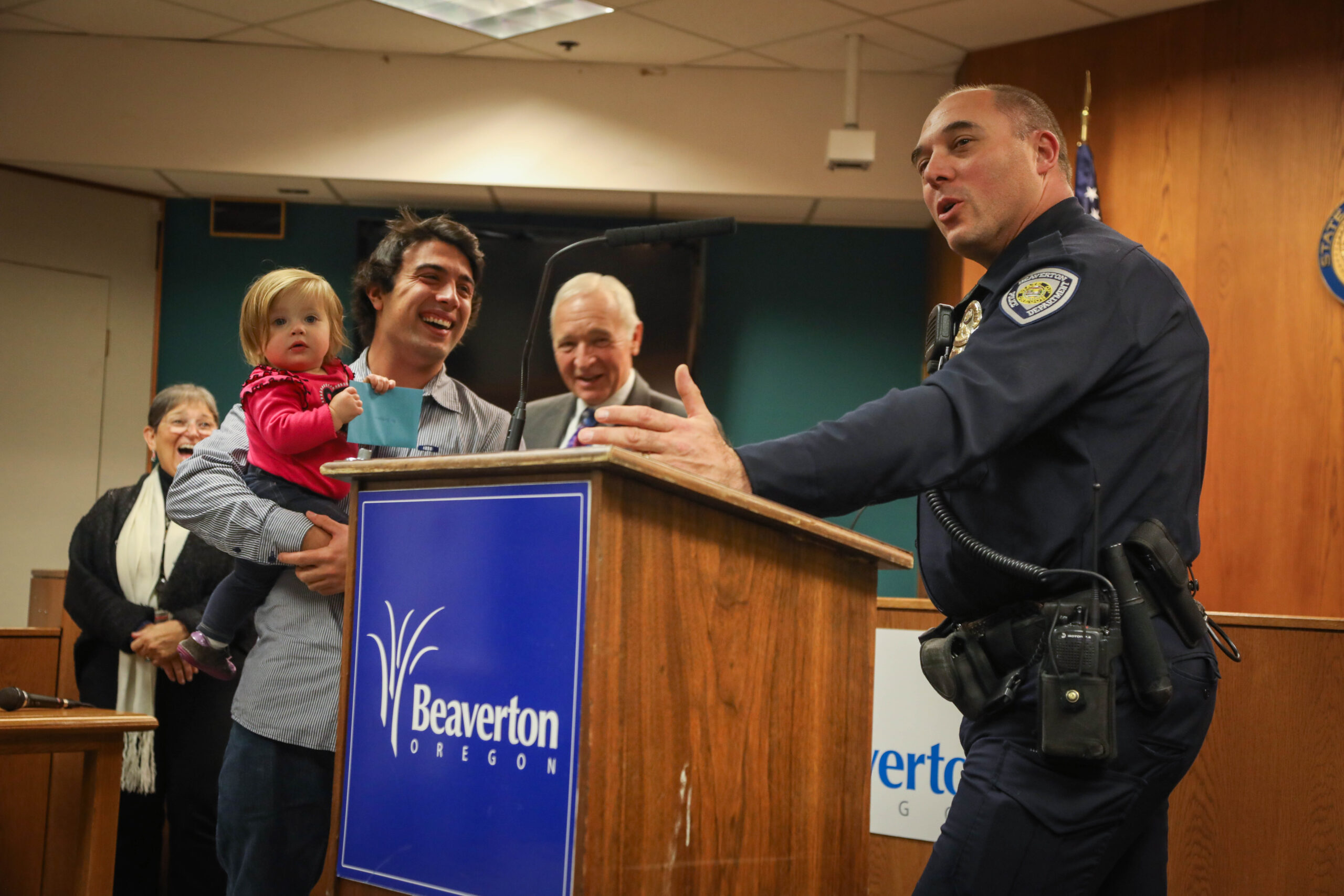
We heard from several program graduates including Molly, who appeared with her husband and young daughter. “When I entered sobriety court, I’m not entirely sure I wanted to get sober, but sobriety court basically made me get sober, and I couldn’t be more grateful for that,” she said. Molly recently graduated from the University of Michigan. “I wouldn’t be the happy, constructive person that I am,” she said. “It’s a life change.” Val, another program graduate, echoed these sentiments. “Sobriety court has been a blessing for me,” she said. “I’m clean and sober today. It’s been two years and six months, so it’s a blessing, and I like being clean and sober.”